Introduction to parties in a commercial contract

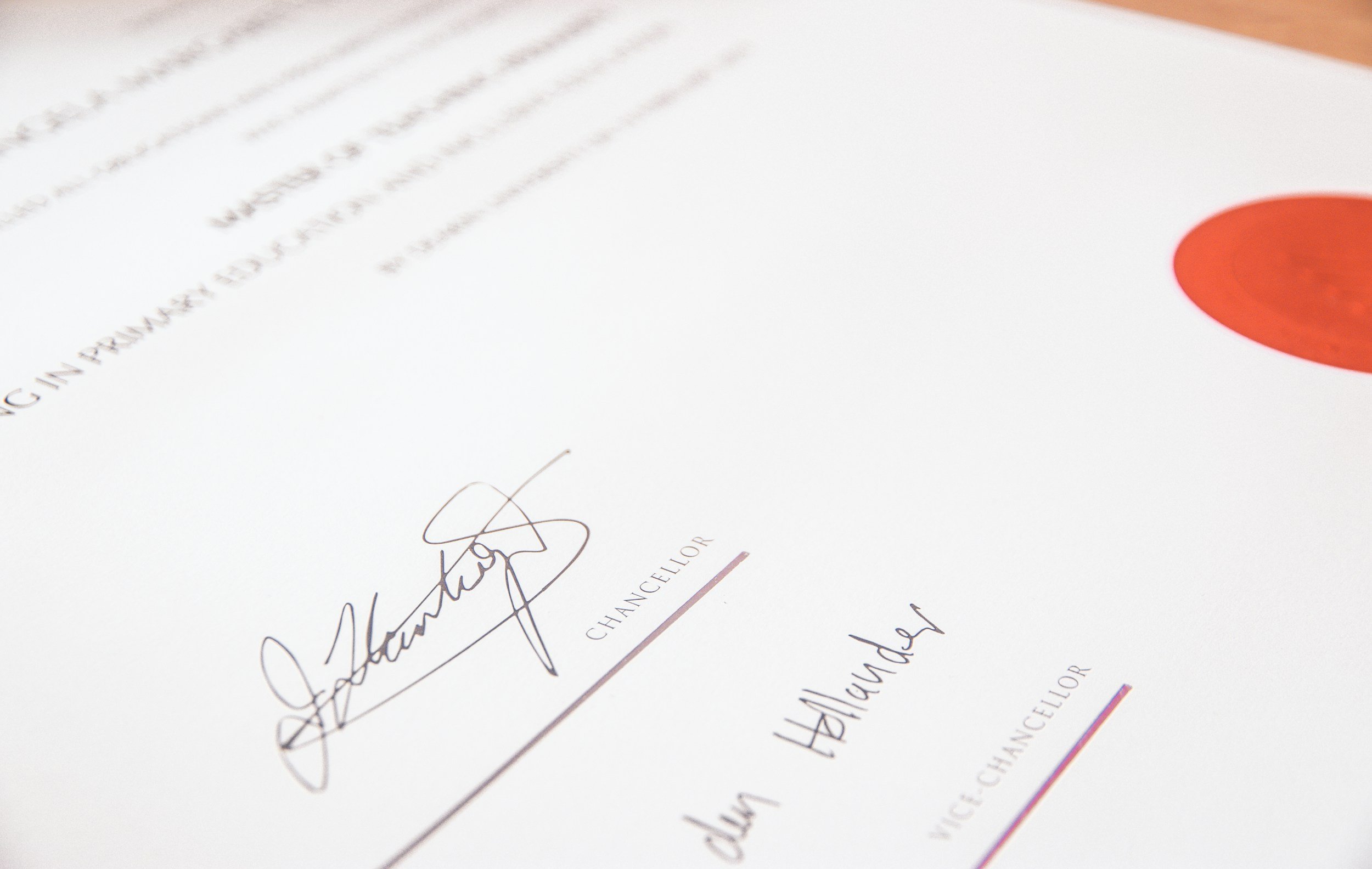
Parties to a commercial contract - image showing people signing a document
Image credit - Unsplash
In business contracts, the details around the parties to a contract can get more complex than an individual contract. This is because, while with an individual signing a contract, only their ID details like passport are sufficient, for a company, their company document and signatory authority both become relevant, and both these differ across countries.
Let’s go deeper and understand how this works.
Company documents
Company documents in the UAE:
In the UAE, the company is identified by its trade license, which should, amongst other things, cover at least the following:
(1) The activities under the trade license should cover the proposed activity under the contract - for example, if the contract is to engage a company for warehousing but their trade license does not cover warehousing and only talks about transportation, that’s not correct in terms of documentation.
If the activity is not clear, for a DED (Department of Economic Development) license, you can go to the relevant websites and check the details, for example, for Dubai mainland the activities can be found at - www.app.invest.dubai.ae/search-business-activities
(2) The trade license should be valid, that is, the expiry date should be in the future. If it’s an expired one, one should ask for the renewed trade license copy.
(3) The type of entity is also important, because it’s part of the company identification. As an example, if the entity is a sole establishment, but it is identified as a limited liability company, the contract can read wrong.
Goes without saying that the name of the company being used in the contract should match with the name mentioned on the trade license.
Sometimes businesses mix up entities within their groups, they might mention the name of one entity and submit the trade license of another. For example, they have 2 entities, one in mainland UAE with the name ABC LLC, and another in a free zone with the name ABC FZ-LLC, and while doing the contract they mention the name as ABC LLC, but share the certificate of FZ-LLC, that is not acceptable. The diligence should be completed for the correct entity.
Company documents in other countries:
In other countries, trade licenses might not be issued, in that case, there might be a company incorporation/registration certificate. Unlike trade licenses, they are not issued every year, but they might have a supplemental document, like a certificate of good standing, which shows a more recent standing. Activities may or may not be covered in the same document, depending on the country. The key point remains the same - establish the company’s validity and current status, along with its activities.
Signatory’s authorization documents
Signatory’s authorization documents in the UAE:
Signatory’s authority to sign includes documents like POA - image showing a document with a stamp
Image credit - Unsplash
The UAE is fairly straightforward as far mainland/onshore is concerned.
If the person who is going to sign named on the license as a Manager, it’s usually presumed that they are authorized to represent the company for everything, and people usually don’t do further due diligence, which is kind of accepted as industry practice.
Pro tip (for anyone who wants to be sure):
Even being named as a Manager is not a guarantee of the complete power - usually there is a background company document which gives the details, common in bigger companies and multinationals. For example, that underlying document might say that they are authorized to sign contracts upto a certain value.
If the person is not named as a Manager as per the trade license, a notarized power of attorney (POA) becomes relevant. Many ask - why, what’s the big deal, why can a company letter authorizing someone not be sufficient. Simply because, the law does not recognize a letter, because the person authorising via the letter might not be authorised themselves to confer that authority. To authorize someone in the UAE, a notarized power of attorney is required, which is granted by either the Manager under the trade license or another person already having a valid POA in their favour, where the chain from the respective POA to the company needs to be complete.
On top of that, the existence of a POA is not sufficient. Checking the content to see whether that person is authorized to sign that particular kind of transaction is required. For example, some POAs give the authority to sign all governmental documents like employment contracts, trade license applications, etc., but do not give the right to sign service contracts. Some others will give the right to sign service contracts but will limit at a certain value. Yet some others will give the right but not solely, it would be jointly with someone else.
Sometimes when the language is not clear it may become relevant to check the Arabic version, since that prevails.
Ignoring these can be costly mistakes, if the other party invokes a “this person was not authorized to sign hence this contract doesn’t hold up” situation.
Will they eventually win if this goes to the court - maybe not.
But would it be worth to spend resources and time over this kind of an issue - definitely not.
So - is the above the only way, or can any other document help?
Depending on the structure - type of entity, where is it registered (free zone versus mainland), in some cases even in the UAE it is possible to have other documents, e.g. in some free zones like Jebel Ali Free Zone a directors’ register is possible to retrieve, and that’s considered acceptable; in some other structures, a board of resolution given by the foreign parent company can help. Having said that, the thumb rule to remember is - always check if the document is locally issued or converted to local standards (aka legalization). For a notarized POA issued in the UAE or a free zone register or a trade license issued in the UAE, since they come from local authorities, this is enough. But if there is a board resolution issued by a shareholder in another country, the litmus test is if there is a MOFA stamp on it, since that’s the final stamp in the process of legalization.
Signatory’s authorization documents in other countries:
Depending on the country, signatory’s authorization document can be supported by either the company document itself (like the UAE, some other countries have this), but in most other countries it forms part of a separate document, for example, a board resolution.
Even after doing all of this due diligence, can be we sure that the documents are valid. Not really, because if the other party shares a POA but it’s been replaced by a later one, we don’t have any way to know that. All we can do is try and check as much as we can, and if the other party is not transparent with us, that’s on them.
Some organizations get into further diligence and clearance, for example, checking the ultimate beneficial owners, signatory’s ID, etc. but that’s a topic for another day.
If you liked this post or think this can help someone, please do share the link forward.